- Phone / WhatsApp:+86 157 0677 9792
- sales@toonice.com
-
English

What Is the Difference Between Switchgear and Transformers?
Jul 05,2026
Switchgear and transformers serve as fundamental electrical components within power systems and substations. Transformers adjust voltage levels to reduce transmission loss across long distances. Switchgear consists of switches and circuit breakers that control, isolate, and protect circuits from operational faults. Both components work together to ensure efficient power distribution.
This article details the definitions, core functions, operating principles, and primary distinctions between switchgear and transformers.
Key Takeaways
Transformers change AC voltage levels through electromagnetic induction, whereas switchgear manages, switches, and protects electrical circuits.
Transformers consist of cores, windings, and insulating oil or air, while switchgear combines circuit breakers, disconnect switches, fuses, and busbars.
Switchgear actively cuts off fault currents to protect the electrical grid, while transformers rely on switchgear for fault protection.
Substations position switchgear at the input and output sides of transformers to route power safely.
What Is a Transformer?
A transformer is a static electrical device that alters alternating current voltage through electromagnetic induction. It acts as a voltage regulator in power transmission networks by stepping down high voltages for home and industrial use or stepping up low voltages for long-distance transmission. Transformers contain no moving parts, which makes them structural, reliable units.
What Is Switchgear?
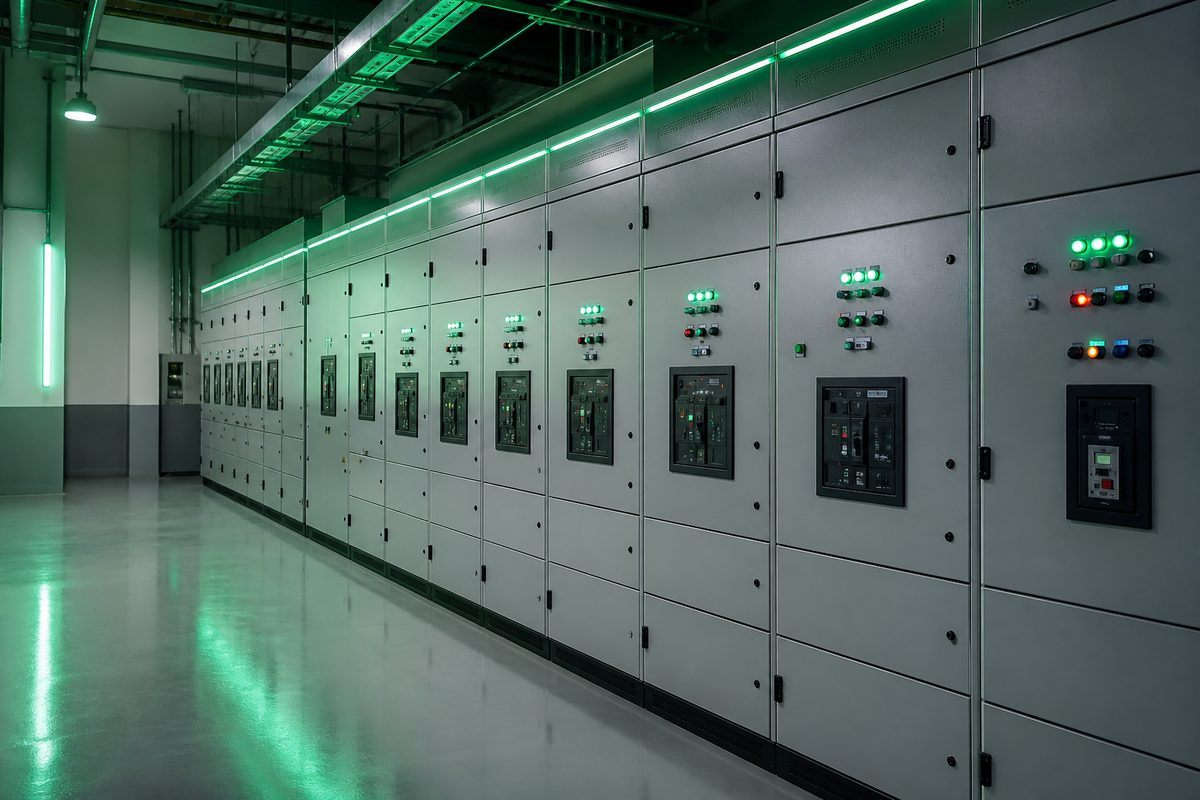
Switchgear refers to a combination of devices that control, protect, and isolate electrical equipment in a power system. It includes circuit breakers, disconnect switches, load switches, fuses, and control elements. Switchgear routes load currents during normal operations and interrupts fault currents during overloads or short circuits to keep equipment safe.
What Are the Main Differences Between Transformers and Switchgear?
Core Operating Principles
Transformers and switchgear operate on different physical mechanisms. A transformer relies on Faraday’s law of electromagnetic induction, creating an alternating magnetic field between primary and secondary coils on a closed core to transfer power between voltage levels without mechanical movement. This process converts energy through physical fields without mechanical contact movement.
Switchgear uses mechanical contact movement to control and interrupt circuits. Switchgear separates internal contacts inside quenching media like sulfur hexafluoride gas, vacuum, or air to break or connect currents. Its operation centers on mechanical motion and arc extinction rather than energy transformation.
System Functions and Roles
Transformers and switchgear serve distinct operational roles in power networks. A transformer converts voltage levels to optimize transmission efficiency and match consumer needs. It cannot detect or clear short-circuit faults on its own, so it focuses solely on energy adjustment.
Switchgear handles grid control, isolation, and protection. When an overload, short circuit, or ground fault occurs, switchgear receives protection signals and interrupts fault currents within milliseconds to prevent damage to large equipment. It serves as an active guardian for the grid.
Internal Structures and Components
Transformers and switchgear feature completely different physical designs. A transformer uses a centralized structure made of laminated silicon steel cores, copper or aluminum windings, insulating oil or dry insulation, and cooling tanks. Its design focuses on heat dissipation, magnetic conduction, and high-voltage insulation.
Switchgear is an integrated assembly combining several sub-devices. Its structure includes circuit breaker units, disconnect switches, ground switches, transformers for measurement, busbars, and protection control circuits. These components fit inside metal enclosures to form complete switchgear cabinets.
Maintenance and Service Life
Transformers and switchgear differ in maintenance demands and operational lifespans. Because transformers lack moving parts, they experience minimal internal wear and often operate for 30 to 50 years. Maintenance focuses on testing insulating oil, monitoring winding temperatures, and checking seals.
Switchgear requires frequent maintenance because it contains mechanical drives and moving contacts. Interrupting fault currents erodes arc-quenching media and contact materials. Technicians must conduct regular mechanical tests, inspect contact wear, and replenish quenching media to maintain performance.
Installation Footprint and Space Requirements
Transformers and switchgear impose distinct physical layout demands on substation infrastructure. A transformer requires substantial dedicated space to accommodate heavy core structures and large cooling systems like radiators or oil tanks. Plant designers position transformers in open outdoor yards or specialized vaults with strict fire barriers.
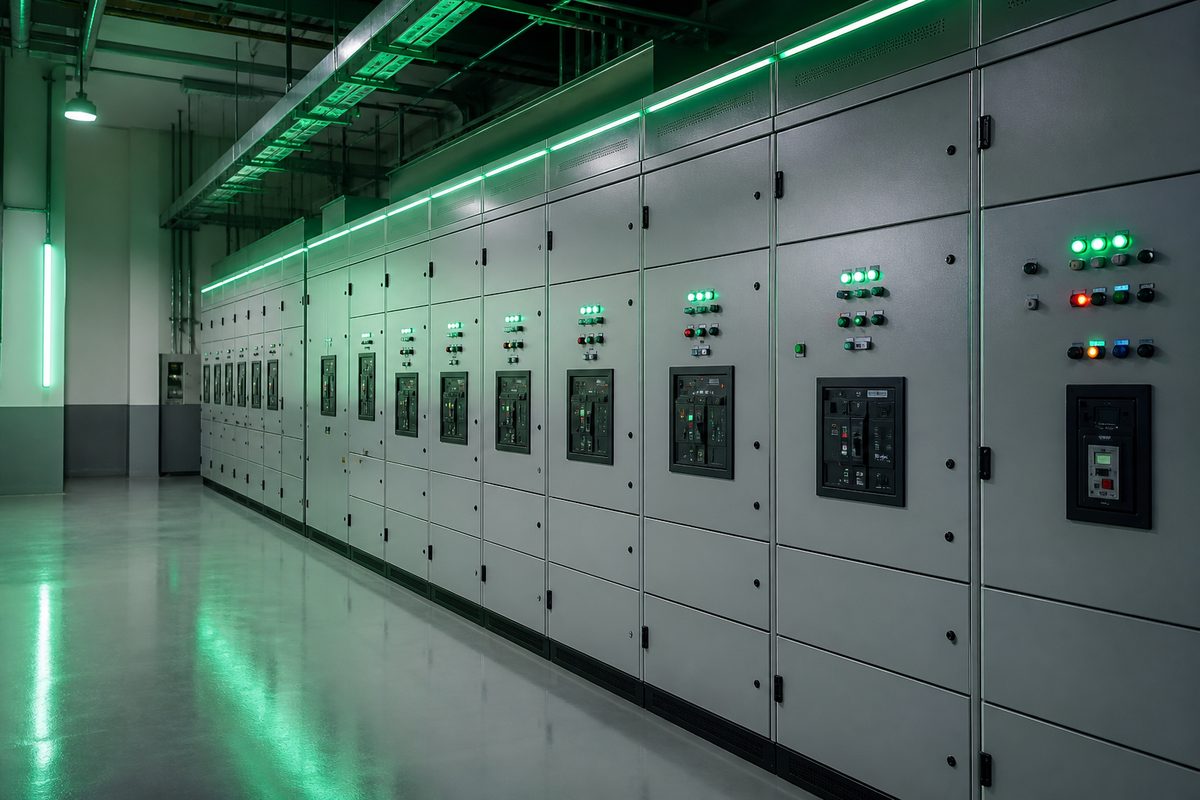
Switchgear utilizes modular metal enclosures that consolidate multiple switching and protection components into compact cabinets. Substation operators align these cabinets in clean rows inside indoor control rooms or prefabricated shelter units. This modular assembly optimizes vertical floor space compared to standalone transformer yards.
Energy Loss and Efficiency Profiles
Transformers and switchgear generate different types of power loss during routine operations. A transformer experiences continuous iron core losses from magnetic hysteresis alongside copper losses from winding resistance while energized. Modern transformers maintain efficiency above 98 percent under steady load conditions.
Switchgear exhibits minimal power loss because current flows directly through solid metal busbars and closed contact surfaces. Energy dissipation occurs mainly as minor heat from contact resistance or during brief arc-quenching events when clearing electrical faults. Switchgear maintains higher operational efficiency under standard load conditions.
Comparison Overview Between Transformers and Switchgear
| Parameter | Transformer | Switchgear |
|---|---|---|
| Definition | Static equipment that converts AC voltage levels | Combined assembly that controls, protects, and isolates circuits |
| Core function | Steps voltage up or down to optimize transmission | Routes current and interrupts fault short circuits |
| Operating principle | Uses Faraday’s law of induction | Uses mechanical contact movement and arc quenching |
| Components | Core, primary and secondary windings, insulation, cooler | Circuit breakers, switches, fuses, busbars, protection relays |
| Mechanical motion | Static unit with no moving parts | Contains mechanical transmission drives and switches |
| Fault response | Absorbs faults passively without self-interruption | Detects faults actively and cuts circuits in milliseconds |
| Maintenance focus | Oil testing, temperature checks, seal inspection | Mechanism lubrication, contact inspection, media maintenance |
How to Choose Between Switchgear and Transformer
Choosing a transformer is necessary when your system must change voltage levels between grid lines and end-user equipment. Transformers step down high transmission voltages to lower levels, supplying safe power matched to facility requirements.
Selecting switchgear is essential when your installation requires circuit control, isolation, or fault protection. Switchgear uses breakers—such as a vacuum circuit breaker—to interrupt short circuits, protecting equipment and allowing safe maintenance without total power shutdowns.
In substation design, choosing between switchgear and transformers is rarely an either-or choice. Switchgear protects and routes electricity, while transformers convert the voltage, making both components necessary for a complete system. Pair them with low-voltage switchgear or a ring main unit as your layout requires.
Conclusion
Transformers and switchgear play distinct, complementary roles in power systems. Transformers adjust and convert voltage levels to maintain efficient energy transfer, while switchgear handles circuit control and fault protection to keep operations stable. Understanding these distinctions helps optimize substation design and grid performance.

--- END ---

MV & LV Equipment Manufacturer · Wenzhou, China
COMPANY
PRODUCTS
INDUSTRIES