- Phone / WhatsApp:+86 157 0677 9792
- sales@toonice.com
-
English
What is Switchgear?
Jun 12,2026
Switchgear refers to electrical equipment used in power systems to control, protect, and isolate electrical circuits, ensuring stable transmission and distribution of electrical energy.
It is widely used in power plants, substations, industrial distribution systems, and commercial buildings. The system normally includes circuit breakers, disconnect switches, busbars, and protection devices.
It reduces the spread of electrical faults and supports safe operation for both equipment and personnel. This article explains the basic concept of switchgear, how it works, its main functions, and how it is applied across different electrical systems.
Key Takeaways
- Switchgear controls, protects, and isolates electrical circuits in power systems
- It supports stable operation of electrical networks under normal and fault conditions
- Voltage levels divide switchgear into low voltage, medium voltage, and high voltage categories
- It is widely used in industrial systems, power grids, buildings, and renewable energy systems
What is Switchgear?
Switchgear is an essential part of electrical power systems, designed to control, protect, and isolate electrical equipment and circuits. It is widely used in substations, distribution rooms, industrial facilities, and utility networks where reliable power management and equipment protection are required.
A typical switchgear assembly is housed within a metal enclosure and consists of components such as circuit breakers, disconnect switches, fuses, protection relays, busbars, and other conductors. These devices work together to ensure the safe distribution of electrical power throughout the system.
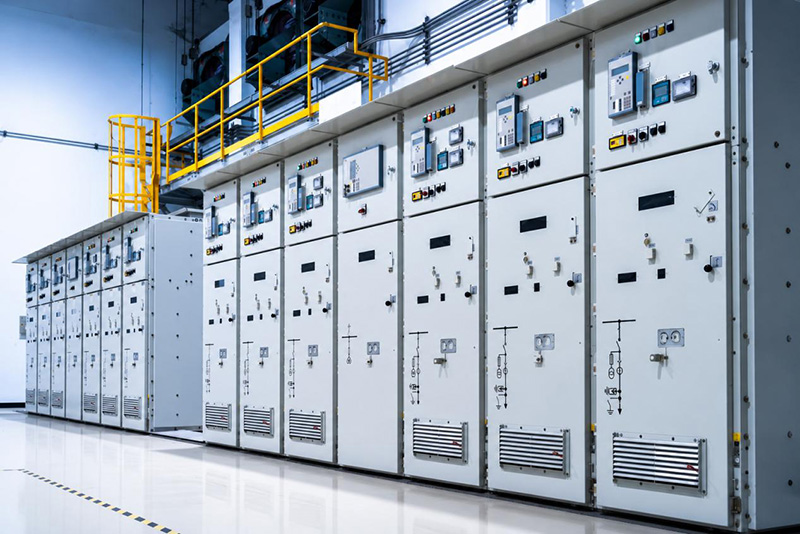
Circuit breakers are among the most critical elements of switchgear. In the event of an electrical fault, they automatically interrupt the current flow, preventing damage to equipment and minimizing the impact on the wider network.
By isolating faulted sections and maintaining normal power distribution, switchgear helps improve system reliability, enhances operational safety, and supports the efficient operation of electrical installations.
Functions of Switchgear
Circuit control
Switchgear controls the switching of electrical circuits during normal operation. It distributes electrical power according to load conditions across different parts of a system. This process improves operational stability and reduces unnecessary energy loss while maintaining consistent power delivery across connected networks.
Fault protection
When short circuits or overloads occur, switchgear detects abnormal current levels and disconnects the affected circuit. Circuit breakers and protection relays work together to react within milliseconds. This response limits equipment damage and prevents electrical faults from spreading across the system.
Isolation for maintenance
Switchgear allows electrical circuits to be isolated during maintenance work. This separation ensures that maintenance activities can be performed without exposure to live electrical components.
It also prevents interference with other parts of the system during repair or inspection work in industrial and utility environments.
System stability control
Switchgear supports system stability by managing power flow and responding to abnormal electrical conditions. It reduces the impact of faults and maintains balanced distribution across the network.
This function supports continuous operation even when electrical demand changes across different parts of the system.
Types of Electrical Switchgear
Low voltage switchgear LV
Low voltage switchgear is used in systems operating below 1 kV. It is common in residential buildings, commercial facilities, and small industrial installations.
The structure is compact and designed for distribution control at the final stage of power delivery. It is often installed in distribution panels and switchboards where space and maintenance efficiency matter.
Medium voltage switchgear MV
Medium voltage switchgear operates in the range from 1 kV to 36 kV. It is widely used in industrial plants and urban distribution networks. These systems often rely on air insulated or gas insulated designs to handle higher electrical stress. MV switchgear manages distribution between substations and medium scale industrial loads.
High voltage switchgear HV
High voltage switchgear operates above 36 kV and is used in transmission systems and large substations. It often uses gas insulated or hybrid insulation structures to maintain stable operation under high electrical stress.
HV switchgear supports long distance power transmission and maintains stable grid operation across large networks.
Main Components of Switchgear
Switchgear systems include several components that work together to control and protect electrical networks.
Circuit breaker
A circuit breaker disconnects electrical current during fault conditions. It reacts to abnormal current levels and interrupts the circuit within a very short time. This process protects electrical equipment from damage caused by overload or short circuit events.
Disconnect switch
A disconnect switch separates a circuit from the power source when no load is present. It is used to create a visible isolation point during maintenance work. It operates together with circuit breakers to ensure safe handling of electrical systems.
Protection relay
A protection relay monitors electrical values such as current and voltage. When abnormal conditions are detected, it sends a trip signal to the circuit breaker. This allows the system to respond automatically to electrical faults.
Busbar system
A busbar system collects and distributes electrical power across multiple circuits. It connects different components within switchgear and ensures stable power flow between incoming and outgoing circuits.
Why Switchgear Matters
Switchgear supports safe and stable operation of electrical systems by controlling power distribution and isolating faults. It reduces system downtime by disconnecting faulty sections without affecting the entire network.
It also supports system expansion and maintenance across different voltage levels. Power systems rely on switchgear to maintain continuous operation under varying electrical conditions.
Is There A Difference Between Switchgear and Switchboards?
Although switchgear and switchboards are sometimes referred to in the same way, they serve different purposes in an electrical system.
Switchgear is designed not only to control and protect the power supply, but also to disconnect equipment from the power source when a fault occurs. This helps prevent damage and keeps the system operating safely.
Switchboards, by contrast, are mainly used to distribute electricity to different circuits or loads. They are commonly found in commercial buildings and other low-voltage applications.
Another key difference is their voltage capacity. Switchgear can be built for medium- and high-voltage systems, with some high-voltage equipment rated up to 350 kV. Switchboards, however, are generally limited to low-voltage applications and are rarely rated above 600 V.
Applications of Switchgear in Industry
Switchgear is widely used in industrial environments where stable power supply supports production systems. Factories depend on it to control motors, production lines, compressors, and automation equipment.
When electrical faults occur, switchgear isolates the affected circuit and prevents disruption across the production system.

In industries such as metallurgy, chemical processing, manufacturing, and mining, switchgear divides electrical networks into separate zones. This structure allows operators to manage power distribution across different sections of a facility.
Modern systems often connect switchgear with automation platforms for remote monitoring and real time control, which supports safer operation and consistent production output.
Conclusion
Switchgear manages control, protection, and isolation of electrical circuits in power systems. It operates across different voltage levels and supports stable energy distribution in industrial, commercial, and utility networks.
Understanding its structure and function helps explain how modern electrical systems maintain stable operation under normal and fault conditions.
FAQs
Q1 What is the main function of switchgear?
It controls, protects, and isolates electrical circuits in power systems
Q2 Is switchgear the same as a circuit breaker?
A circuit breaker is one component within a switchgear system
Q3 Where is switchgear used?
It is used in substations, industrial systems, and commercial buildings
Q4 What types of switchgear exist?
Low voltage, medium voltage, and high voltage systems
Q5 Is switchgear safe to use?
It is designed to support safe operation and fault protection in electrical networks

--- END ---

MV & LV Equipment Manufacturer · Wenzhou, China
COMPANY
PRODUCTS
INDUSTRIES