


In power system projects, the choice of switchgear affects system operation, land use, construction timeline, and long term maintenance. The two main types in use today are Air Insulated Switchgear (AIS) and Gas Insulated Switchgear (GIS).
With urban density increasing and grid structures becoming more complex, the comparison between AIS and GIS has moved beyond a simple technical topic. It now involves engineering constraints and cost considerations. A clear explanation across structure, operation, and application helps build a practical view.
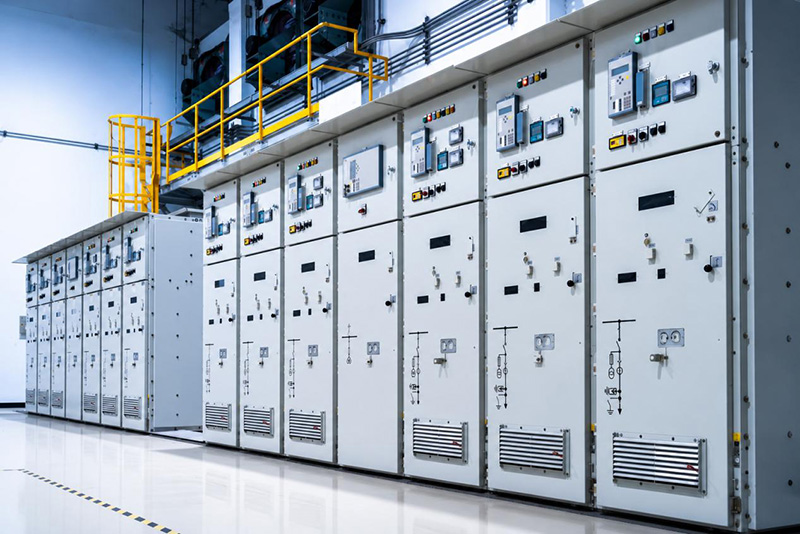
What is AIS(Air Insulated Switchgear)?
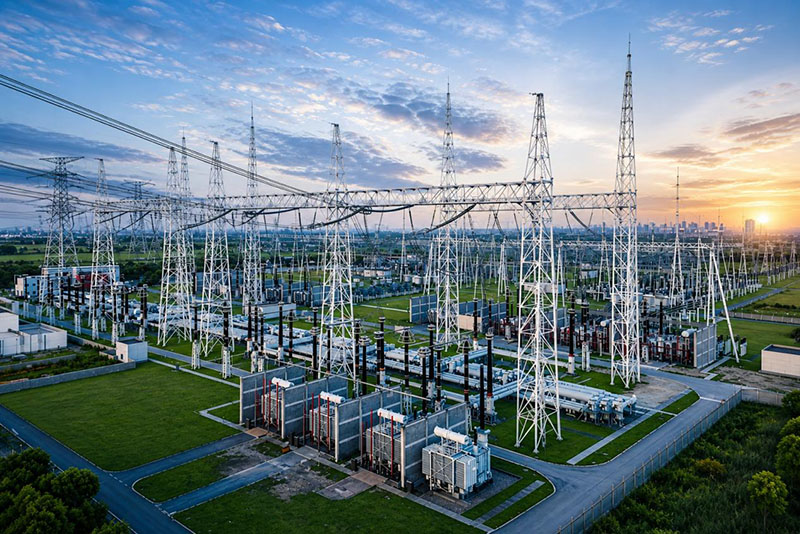
AIS uses air as the insulating medium. Conductors are supported by insulators and arranged in an open layout. Adequate clearance between components must be maintained to meet insulation requirements.
This arrangement leads to wider spacing and larger land use. At the same time, the structure remains visible, which allows operators to observe conditions directly. Signs such as contamination or discharge traces can be identified during routine inspection.
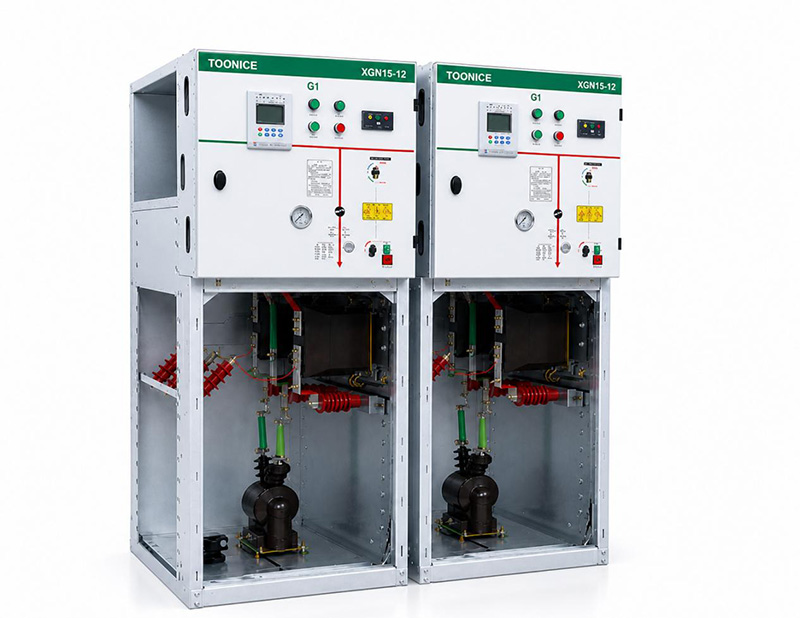
AIS STRUCTURE
AIS switchgear adopts an open internal layout with visible components such as busbars, disconnectors, and circuit breakers, arranged with sufficient air clearance for easy inspection and maintenance.
What is GIS(Gas Insulated Switchgear)?
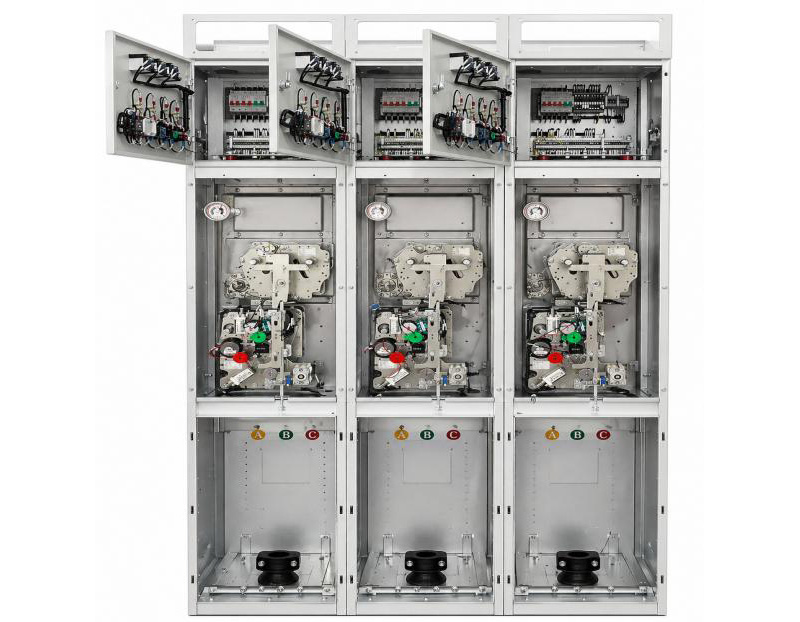
GIS uses insulating gas such as SF₆.ore components like circuit breakers, disconnectors, and busbars are enclosed inside grounded metal enclosures.
The higher dielectric strength of gas allows the same voltage level to be handled within a much smaller space. Equipment becomes compact and modular. The sealed structure also separates internal parts from external conditions.
Core Differences Between AIS and GIS
The table below summarizes how AIS and GIS differ across the factors that matter most in real projects:
| Aspect | AIS | GIS |
| Insulation | Air | SF₆ gas |
| Footprint | Large — requires more spacing | Compact — up to 70% smaller |
| Installation | On-site assembly, longer duration | Factory-assembled modules, faster |
| Initial Cost | Lower | Higher |
| Maintenance | Frequent; standard tools & skills | Less frequent; specialist required |
| Environment | Best in clean, stable conditions | Handles pollution, humidity, coastal |
| Reliability | Good in clean environments | High; sealed from external factors |
| Environmental Impact | No greenhouse gas | SF₆ is high-GWP; requires gas management |
| Typical Use | Suburban substations, industrial zones | Urban, underground, coastal, polluted areas |
How to Choose: Key Decision Factors
Use the following decision flow to identify whether AIS or GIS is the better fit for your project.
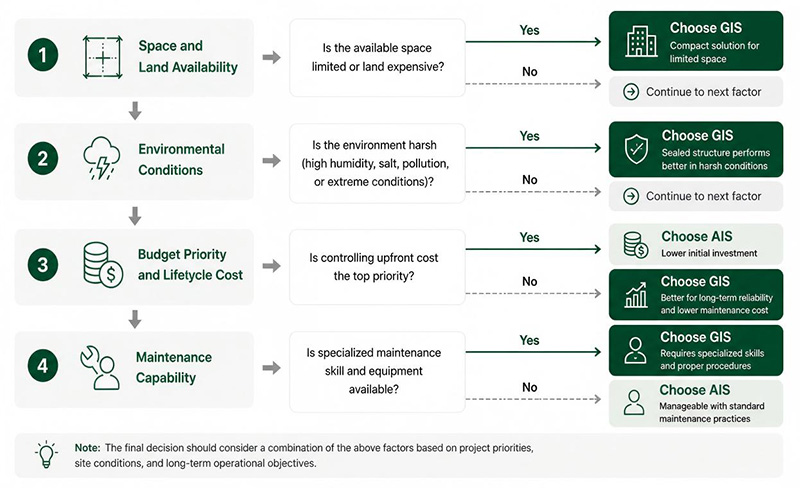
Below is a detailed breakdown of each decision factor.
1. Space and Land Availability
Limited space often leads to GIS. In urban areas, land availability can directly restrict substation design, and compact layouts become a practical solution. GIS allows equipment to be installed in confined areas such as indoor buildings or underground spaces.
In contrast, open areas with fewer space constraints can accommodate AIS layouts more easily. In these cases, the larger footprint does not create major limitations, and the flexibility of arrangement can support phased expansion or future upgrades.
2. Land Availability
Limited space often leads to GIS. In urban areas, land availability can directly restrict substation design, and compact layouts become a practical solution. GIS allows equipment to be installed in confined areas such as indoor buildings or underground spaces.
In contrast, open areas with fewer space constraints can accommodate AIS layouts more easily. In these cases, the larger footprint does not create major limitations, and the flexibility of arrangement can support phased expansion or future upgrades.
3. Upfront Budget and Lifecycle Cost
Projects focused on controlling initial expenditure often select AIS due to its lower upfront cost. This can be relevant in large scale installations where equipment quantity has a direct impact on total investment.
For projects with a longer planning horizon, GIS may be considered from a lifecycle perspective. Lower maintenance frequency and more stable operation can reduce interruptions and associated costs over time. Financial evaluation in such cases often includes both capital and operational aspects.
4. Maintenance Capability
AIS can be handled with standard maintenance practices. Routine inspection, cleaning, and component replacement can be carried out with commonly available tools and general technical training. This makes AIS manageable in locations with limited specialized resources.
GIS requires more specialized skills and equipment. Work involving gas handling, sealing, and internal inspection calls for trained personnel and proper procedures. In regions where such expertise is available, GIS can be maintained in a controlled and consistent manner.
5. Environmental Conditions
Harsh environments tend to favor GIS. Areas with high humidity, salt exposure, or industrial pollution can affect open air insulation performance over time. The sealed structure of GIS limits the influence of these external factors.
Stable environments can support AIS without difficulty. In locations with low pollution and moderate climate conditions, AIS can operate reliably with routine maintenance. Under these conditions, its simpler structure remains practical and predictable.
Typical Application Scenarios
Where AIS Is Commonly Used
- Suburban substations with available land
- Industrial zones with stable, low-pollution environments
- Projects with tight initial budgets or phased expansion plans
- Sites where maintenance teams prefer direct equipment access
Where GIS Is Commonly Used
- Urban centers and dense city networks
- Underground and indoor substations
- Coastal and industrial areas with high pollution or humidity
- Projects requiring fast installation and minimal on-site work
Our GIS RMU Solution
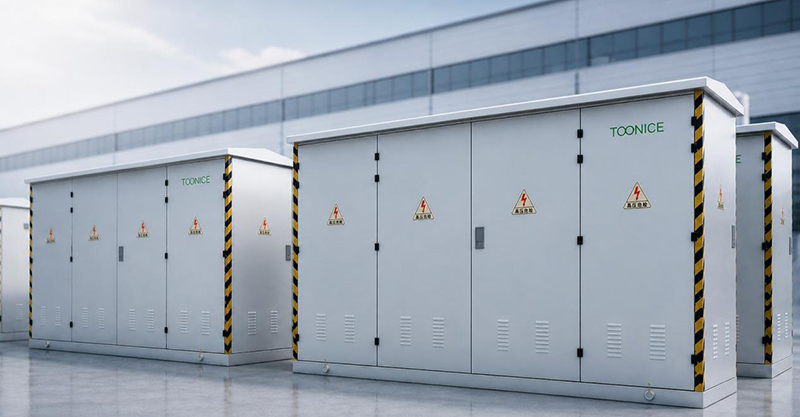
For projects requiring compact, reliable, and low-maintenance medium voltage switching, our GIS Ring Main Unit (RMU) is designed to meet these demands. Factory-assembled and tested before shipment, it reduces on-site installation time while delivering consistent performance across a wide range of environmental conditions.
Our GIS RMU is suitable for primary distribution networks in urban areas, industrial parks, and regions with harsh environmental exposure — including high humidity, coastal salt, and heavy industrial pollution.
We also supply KYN28 air-insulated switchgear for applications where space is available and budget control at the procurement stage is a priority. See our KYN28 switchgear project case in the United States for a real project reference.
→ Read the United States Project Case Study
Summary
AIS and GIS represent two different technical approaches. The difference starts from insulation and extends to structure, installation, and operation. AIS offers a straightforward structure, lower initial cost, and direct maintenance access. It fits projects with available space and stable surroundings.
GIS provides compact layout and stronger resistance to environmental influence. It is widely applied in dense urban networks and complex conditions.
The right choice depends on the specific demands of your project space, cost, environment, and maintenance capability. A balanced view across these factors supports a practical selection.