- Phone / WhatsApp:+86 157 0677 9792
- sales@toonice.com
-
English

Types of Electrical Distribution and Their Differences
Jun 10,2026
Electrical distribution is the part of the power system that delivers electricity from substations to end users. It connects the transmission system with homes, commercial buildings, industrial facilities, and public infrastructure, while keeping electricity at a suitable voltage for safe and stable use.
Primary distribution usually handles medium-voltage power distribution. It is used in industrial parks, large buildings, and high-load power systems. Secondary distribution lowers the voltage further and sends electricity to homes, offices, hospitals, and commercial facilities.
A clear understanding of these two distribution types helps improve supply reliability, guide equipment selection, and reduce operation and maintenance risks.
This article explains the definition of electrical distribution, how distribution systems work, the main types of distribution, the differences between primary and secondary distribution, common distribution equipment, and how to choose a suitable distribution solution.
Key takeaways
- Electrical distribution is mainly divided into primary distribution and secondary distribution, which differ in voltage level, service target, and equipment configuration.
- Primary distribution usually handles medium-voltage power and is used in industrial sites, large buildings, and high-load power systems.
- Secondary distribution delivers electricity to end users and supports power supply for homes, commercial buildings, and public facilities.
- A suitable distribution solution should consider load demand, safety requirements, application scenario, maintenance cost, and sustainability goals.
Why understanding electrical distribution matters
Electrical distribution affects the safety, stability, and efficiency of power supply. Homes, factories, commercial operations, hospitals, data centers, and other facilities all depend on a reliable distribution system.
A well-designed distribution system can reduce power loss, lower the risk of equipment failure, and improve continuity of supply. As renewable energy, electric vehicles, and smart grids grow, distribution systems also need greater flexibility, automation capability, and room for expansion.
What is electrical distribution?
Electrical distribution refers to the process of delivering high-voltage or medium-voltage electricity from the transmission system to end users through substations, transformers, switchgear, and distribution lines.
It is the final section of the power system and the closest section to actual power use. The main tasks of a distribution system are voltage reduction, power allocation, circuit and equipment protection, and stable power supply for different user groups.

How an electrical distribution system works
An electrical distribution system usually starts at a substation. Transmission lines send high-voltage electricity into the substation, where transformers reduce the voltage to a medium-voltage level that suits regional distribution. Electricity is then delivered to different areas through medium-voltage cables, overhead lines, or ring network systems.
For end users, distribution transformers further convert medium voltage into low voltage. Low-voltage switchgear and distribution lines then send power into homes, commercial buildings, or industrial equipment.
During this process, switchgear, protection devices, and automation systems monitor current, voltage, and fault conditions to keep the system operating safely.
Main types of electrical distribution
Primary distribution
Definition of primary distribution
Primary distribution refers to the process in which electricity leaves a substation and is delivered in medium-voltage form to regional distribution networks, industrial users, or large power facilities.
It sits between the transmission system and final low-voltage distribution, which makes it the connecting section between high-voltage transmission and secondary distribution. Its main function is to allocate electricity to different areas or large load centers and provide stable power for later voltage reduction and end-user supply.
Typical voltage levels and applications of primary distribution
Primary distribution usually uses medium-voltage levels, commonly ranging from several kilovolts to tens of kilovolts. The exact standard depends on the country, grid rules, and project needs.
It is often used in urban distribution networks, industrial parks, large commercial complexes, mines, airports, rail transit systems, and energy infrastructure. These systems carry higher loads, so the equipment must meet higher demands for capacity, insulation performance, protection capability, and operating reliability.
Function of primary distribution in industrial and large-load applications
In industrial and large-load applications, primary distribution handles centralized power access, allocation, and control. Large manufacturing plants, chemical plants, data centers, and logistics parks usually need stable high-capacity power supply.
A primary distribution system can allocate medium-voltage electricity to different workshops, production lines, or equipment zones. With proper medium-voltage switchgear, transformers, and protection devices, the system can improve supply stability and reduce the impact of unexpected outages on production.
Secondary distribution
Definition of secondary distribution
Secondary distribution refers to the process in which medium-voltage electricity from the primary distribution system is reduced to low voltage through distribution transformers and then delivered to end users.
It is the section before electricity enters homes, offices, shops, hospitals, schools, and other places where power is used. Since secondary distribution is close to the user side, it focuses on power allocation, electrical safety, load balance, end-circuit protection, and daily maintenance convenience.
How secondary distribution serves end users
Secondary distribution uses low-voltage lines, low-voltage switchgear, distribution boards, and metering devices to deliver electricity to different end users. It allocates power to lighting, air conditioning, elevators, sockets, production equipment, fire protection systems, and other circuits according to load demand.
Secondary distribution systems usually include overload protection, short-circuit protection, and leakage protection, so fault circuits can be cut off in abnormal conditions to protect people, equipment, and buildings.
Applications of secondary distribution in homes, offices, hospitals, and commercial buildings
Secondary distribution is widely used in residential communities, office buildings, hospitals, schools, shopping centers, and hotels. In homes, it sends low-voltage electricity to each household. In office buildings, it supports lighting, air conditioning, network rooms, and elevator systems.
In hospitals, it supports operating rooms, emergency equipment, and backup power systems. In commercial buildings, it supports lighting, security, refrigeration, checkout systems, and fire protection systems that depend on continuous electricity.
Main differences between primary and secondary distribution
Voltage level
Voltage level is the main way to distinguish primary distribution from secondary distribution. Primary distribution usually operates at medium voltage and handles power allocation over larger areas or for higher loads. Secondary distribution usually operates at low voltage and connects directly to end-use equipment.
Because the voltage levels differ, the two systems also differ in insulation design, equipment structure, protection configuration, and safety distance. Primary distribution focuses more on capacity and transmission efficiency, while secondary distribution focuses more on user safety and accessibility.
Service target
Service target is another clear difference between primary and secondary distribution. Primary distribution mainly serves regional distribution networks, large industrial users, commercial complexes, and major infrastructure. It suits centralized and high-load power demand.
Secondary distribution mainly serves homes, offices, shops, schools, and smaller commercial users, since it delivers electricity to specific devices and circuits. In simple terms, primary distribution serves large loads and areas, while secondary distribution serves end users and final circuits.
Position in the power grid
Position in the power grid shapes the function of each distribution type. Primary distribution is located after the substation and before the distribution transformer.
It forms part of the medium-voltage network and handles regional power allocation. Secondary distribution is located after the distribution transformer and before user equipment.
It forms the final section of the low-voltage power system. Since primary distribution is closer to the grid side and secondary distribution is closer to the user side, their design focus, maintenance method, and fault impact range are different.
Equipment used
The equipment used in each system reflects its technical features. Primary distribution usually uses medium-voltage switchgear, ring main units, medium-voltage cables, relay protection devices, and distribution transformers.
These devices must meet higher voltage and capacity requirements. Secondary distribution mainly uses low-voltage switchgear, distribution boards, circuit breakers, busbar trunking, metering devices, and final protection devices. Primary distribution equipment focuses more on insulation and breaking capacity, while secondary distribution equipment focuses more on branch control and user safety.
Safety requirements and maintenance methods
Safety requirements and maintenance methods differ between the two systems. Primary distribution involves medium-voltage electricity, so operation risk is higher and trained personnel usually need to follow strict procedures for inspection, isolation, and energization.
Secondary distribution works at a lower voltage, yet it is closer to occupied areas, so leakage protection, grounding, overload protection, and routine inspection receive more attention. Primary distribution focuses on system-level fault isolation, while secondary distribution focuses on end-user safety and fast restoration.
Comprehensive comparison of primary and secondary distribution
| Comparison item | Primary distribution | Secondary distribution |
| Grid position | After the substation and before distribution transformers | After distribution transformers and before end-use equipment |
| Typical voltage level | Medium voltage, often from several kilovolts to tens of kilovolts | Low voltage for direct use by end users |
| Main function | Allocates electricity across regions, industrial sites, and large load centers | Delivers electricity to homes, buildings, equipment, and final circuits |
| Service target | Industrial parks, large buildings, commercial complexes, mines, airports, and energy facilities | Homes, offices, hospitals, schools, shops, hotels, and small commercial users |
| Common equipment | Medium-voltage switchgear, ring main units, medium-voltage cables, relay protection devices, and distribution transformers | Low-voltage switchgear, distribution boards, circuit breakers, busbar trunking, meters, and final protection devices |
| Design focus | Capacity, insulation, protection coordination, and supply continuity | User safety, branch control, load balance, and circuit protection |
| Maintenance method | Usually handled by trained electrical personnel under strict operating procedures | Usually handled through routine inspection, circuit testing, and local fault repair |
| Fault impact | A fault may affect a wider area or multiple downstream loads | A fault usually affects a building, floor, circuit, or specific user group |
| Main applications | Industrial power systems, regional distribution networks, large public facilities, and renewable energy access | Residential power supply, commercial buildings, hospitals, schools, and end-use power circuits |
| Expansion focus | Transformer capacity, switchgear bays, feeder lines, and regional load growth | Distribution boards, branch circuits, terminal loads, and building-level upgrades |
Core equipment in distribution systems
Power cables
Power cables are the basic equipment that transmits electricity in a distribution system. They create power paths among substations, distribution centers, transformers, and end users. Medium-voltage cables are often used in primary distribution and need good insulation performance, mechanical strength, and environmental resistance.
Low-voltage cables are often used in secondary distribution and deliver power inside buildings or to specific equipment. Cable selection should consider voltage level, current-carrying capacity, installation environment, temperature conditions, and safety standards.
Substations and distribution centers
Substations and distribution centers are major nodes in an electrical distribution system. A substation changes voltage levels and brings electricity from the transmission system into the distribution system. A distribution center allocates and controls electricity within an area or building.
These facilities often include transformers, switchgear, protection devices, metering devices, and control systems. A well-designed substation or distribution center can improve supply reliability, reduce power loss, and make maintenance easier.
Transformers
Transformers are the main devices used for voltage conversion. They can reduce higher voltage to a level that suits distribution or end use, and they can also raise voltage in specific scenarios. A distribution transformer usually completes the voltage conversion between primary distribution and secondary distribution.
Transformer capacity, efficiency, insulation class, cooling method, and loss level directly affect the performance of the whole distribution system. Choosing a suitable transformer helps improve supply efficiency and reduce long-term operating cost.
Medium-voltage switchgear
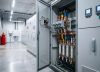
Medium-voltage switchgear is a major control and protection device in primary distribution systems. It is used to connect, disconnect, allocate, and protect medium-voltage circuits. When a short circuit, overload, or ground fault occurs, it can isolate the fault area in time.
Medium-voltage switchgear is widely used in substations, industrial parks, commercial complexes, and large public facilities. Its performance affects the safety and continuity of medium-voltage distribution systems.
Modern medium-voltage switchgear can also include monitoring, communication, and automation functions to improve grid management.
Low-voltage switchgear
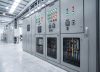
Low-voltage switchgear connects final loads in secondary distribution systems. It distributes low-voltage electricity from transformers to lighting, power equipment, air conditioning, elevators, fire protection systems, and other circuits.
Low-voltage switchgear usually includes circuit breakers, contactors, protection relays, meters, and busbar systems. It distributes power and protects equipment and people when abnormal conditions occur. For building systems and industrial terminal systems, low-voltage switchgear helps maintain stable power supply.

Conclusion: understanding distribution types supports a safer, more efficient, and more sustainable grid
Electrical distribution connects the grid with end users. As smart grids, renewable energy, and electric vehicles continue to develop, distribution systems will become more digital, flexible, and sustainable.
Toonice offers many core devices for distribution systems. If you have any questions about these products or related solutions, you can contact us.
FAQs
Q1 What does electrical distribution mean?
Electrical distribution means the process of delivering electricity from substations to end users, including voltage reduction, power allocation, protection, and control.
Q2 What is the main difference between primary distribution and secondary distribution?
Primary distribution usually uses medium voltage and serves large loads or regional networks. Secondary distribution usually uses low voltage and serves end users directly.
Q3 Where is primary distribution mainly used?
Primary distribution is commonly used in industrial parks, large manufacturing plants, commercial complexes, airports, rail transit systems, and renewable energy projects.
Q4 Which users does secondary distribution mainly serve?
Secondary distribution mainly serves homes, office buildings, hospitals, schools, shops, and other end-use locations.
Q5 What factors matter most when choosing a distribution solution?
The main factors include load demand, application scenario, safety requirements, reliability, maintenance cost, and future expansion needs.

--- END ---
Prev: What is Switchgear?

MV & LV Equipment Manufacturer · Wenzhou, China
COMPANY
PRODUCTS
INDUSTRIES