- Phone / WhatsApp:+86 157 0677 9792
- sales@toonice.com
-
English
Are Substations Really That Powerful?
Jun 01,2026
Substations are an indispensable part of the power system, and their main functions include voltage conversion, power distribution, grid control, and safety protection. Whether for household lighting, factory production, or urban operations, stable electricity supply depends on substations.
This article explains the main functions of substations, their significance in the power grid, and the influence they have on daily life.
Key Takeaways
- Substations are responsible for voltage conversion, power distribution, grid regulation, and safety protection within the power system.
- High voltage transmission reduces energy loss and improves long distance electricity delivery efficiency.
- Substations distribute electricity to residential areas, factories, commercial centers, and public infrastructure according to demand.
- Automated monitoring and relay protection systems help maintain stable and safe grid operation.
- Without substations, large scale blackouts and unstable electricity supply would become much more common.
What Is a Substation?
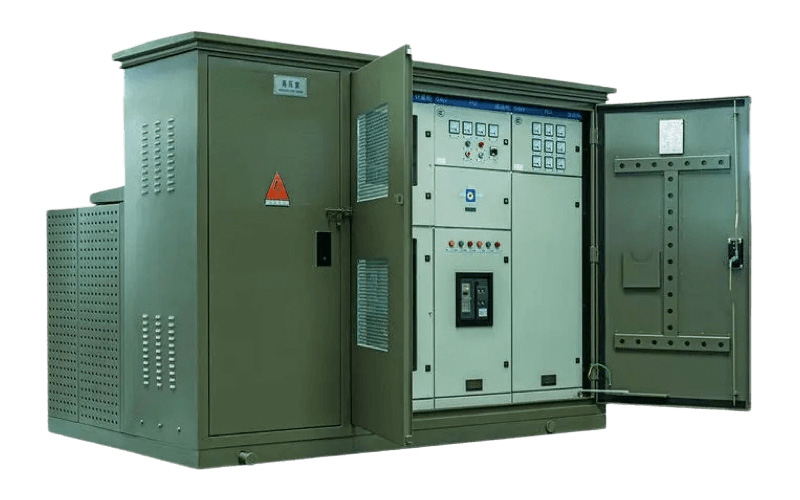
A substation is a central node in the power system that is responsible for stepping voltage up or down, distributing electricity, and controlling power flow.
Electricity generated by power plants cannot be delivered directly to homes and businesses, so it must pass through substations where voltage is adjusted before being transmitted to different areas.
The Main Functions of a Substation
Voltage Conversion
Voltage conversion is one of the most fundamental functions of a substation. Electricity generated by power plants cannot directly meet the requirements of long distance transmission, so substations are used to increase voltage levels.
When voltage is increased, the current decreases, which reduces energy loss during transmission and improves efficiency. After electricity reaches cities, factories, and residential areas, substations lower the voltage so that it matches the safety standards required for daily electrical equipment.
Without the processes of stepping voltage up and down, the power system would struggle to operate safely and steadily.
High voltage transmission provides several advantages that improve the efficiency of modern power networks. When electricity is transmitted over long distances at low voltage, a large amount of energy is lost as heat through the transmission lines.
By using high voltage transmission, the current is reduced, which lowers resistance losses and decreases transmission costs. High voltage transmission also allows electricity to reach remote areas more effectively. Because of this, substations support the reliable operation of modern transmission systems.
Power Distribution
Substations are responsible for distributing electricity to different regions according to demand. Residential communities, industrial parks, commercial centers, and rural areas all require different voltage levels and power capacities, so substations manage the allocation of electricity through various transmission lines.
By adjusting and controlling power flow based on actual consumption needs, substations help ensure that every area receives a stable electricity supply. Because substations coordinate the distribution process, daily life and industrial production can continue smoothly.
Within the power grid, substations function much like transportation hubs that connect and coordinate different routes. Electricity generated by various power plants is transmitted through power lines to substations, where it is then distributed to different regions.
Without substations managing this process, the power grid could become disorganized, which might lead to uneven electricity supply. Substations can also adjust power delivery according to changes in electricity demand, which improves the efficiency and stability of the grid.
Power Control and Regulation
Maintaining stable operation of the power system is one of the primary responsibilities of substations. During grid operation, electricity demand changes constantly, and fluctuations in current, voltage, or frequency may damage equipment or even cause blackouts.
Substations use control equipment and regulation systems that monitor the operating condition of the grid in real time and respond quickly when abnormalities occur.
Through these adjustments, substations help ensure stable electricity supply for households while supporting the safe operation of industrial equipment and large machinery.
Modern substations widely use automated monitoring systems that improve operational efficiency and management standards.
Through intelligent systems, operators can monitor equipment conditions, transmission loads, and operational data in real time. Once an abnormal situation is detected, the system can issue alarms and automatically handle some faults.
Automation technology reduces the pressure of manual inspections while increasing fault response speed and lowering blackout risks. As smart grids continue to develop, automated monitoring systems are becoming a major part of modern substations.
Grid Protection Functions
During power grid operation, faults such as short circuits and overloads may occur, and substations are responsible for protecting equipment from damage.
When abnormal conditions appear on a transmission line, protective devices inside the substation quickly detect the fault location and disconnect the affected line to stop the problem from spreading further.
Without these protection measures, transformers, cables, and other electrical equipment could suffer serious damage, which might even lead to large scale power outages. Because of this, substations not only transmit electricity but also maintain the safety of the entire grid.
Relay protection systems are the core safety systems used in substations to detect and manage electrical faults. When abnormal current or voltage conditions occur, relay protection devices respond within a very short time and send trip commands that disconnect the faulty circuit.
This process helps reduce the impact of accidents while protecting both equipment and personnel. Modern relay protection systems have become more intelligent, and they can analyze fault conditions automatically while improving the reliability and stability of the power grid.
What Would Happen Without Substations?
Electricity Could Not Be Transmitted Efficiently Over Long Distances
Without substations, the power system would not be able to transmit electricity efficiently. Since voltage could not be increased for transmission, large amounts of energy would be lost over long distances, which would reduce efficiency and make it difficult for many regions to receive stable electricity.
The Risk of Large Scale Blackouts Would Increase
Substations are responsible for grid regulation and fault protection. Without substations, faults on transmission lines could not be isolated quickly, which could trigger chain reactions and lead to widespread blackouts that affect normal social operations.
Industrial and Urban Operations Would Be Affected
Modern cities and industrial production rely heavily on stable electricity supply. Without substations, electricity could not be distributed steadily to factories, transportation systems, hospitals, and communication facilities, which would significantly reduce operational efficiency across society.

How Do Substations Affect Ordinary People?
Household Electricity Stability
Substations directly affect the stability of residential electricity use. Household lighting, air conditioners, and home appliances all require safe and stable voltage levels. By regulating and distributing electricity, substations help ensure continuous and reliable power supply for daily life while reducing the likelihood of outages.
Continuity of Industrial Production
Industrial production depends heavily on stable electricity supply, and substations provide continuous power support for factories and businesses.
If electricity supply becomes unstable, production efficiency may decrease, equipment may be damaged, and financial losses may occur. Because of this, substations strongly influence industrial development.
Protection of Urban Infrastructure
Urban infrastructure such as subway systems, hospitals, shopping centers, and communication networks all depend on reliable electricity supply.
Through organized power distribution, substations support the normal operation of city facilities. If a substation experiences problems, the operation of the entire city may be disrupted.
New Demands in the Era of Electric Vehicles and Renewable Energy
As electric vehicles and renewable energy industries continue to grow, electricity demand is increasing rapidly.
Substations are required to handle greater power loads while supporting charging stations, solar energy systems, and wind power integration, which helps promote the development of cleaner energy systems in the future.
What Will Future Substations Look Like?
Future substations will continue developing toward intelligent, digitalized, and unmanned operation.
As artificial intelligence, big data, and Internet of Things technologies are applied more widely, substations will be able to achieve remote monitoring, automatic fault analysis, and intelligent power dispatching, which will improve efficiency and operational safety.
At the same time, the rapid growth of renewable energy will require substations to support more energy integration tasks, allowing future power grids to become more efficient, environmentally friendly, and intelligent.
Conclusion
Although substations are not as visible as large buildings or urban landmarks, they support the normal operation of modern society.
From household electricity use to industrial production, from transportation systems to renewable energy development, stable power supply depends on substations. Without substations, the reliable power systems that support modern life today would not exist.
Toonice provides a wide range of substations. Please visit the homepage for more information.
FAQs
Q What are the main functions of a substation?
Substations are mainly responsible for voltage conversion, power distribution, grid control, and safety protection.
Q Why is high voltage used for power transmission?
High voltage transmission reduces energy loss in transmission lines and improves long distance transmission efficiency.
Q Are substations dangerous?
Standard substations are equipped with complete safety protection systems, and residents only need to maintain a safe distance.
Q Is every blackout caused by substation failure?
No. Blackouts may also be caused by transmission line faults, equipment maintenance, or weather conditions.
Q What is the difference between smart substations and traditional substations?
Smart substations use automation and digital technologies, which improve operational efficiency and increase fault response speed.

--- END ---


MV & LV Equipment Manufacturer · Wenzhou, China
COMPANY
PRODUCTS
INDUSTRIES