- Phone / WhatsApp:+86 157 0677 9792
- sales@toonice.com
-
English
What Is SF₆Gas Insulated Switchgear (GIS)?
May 22,2026
SF₆ Gas Insulated Switchgear (GIS) encloses key components — circuit breakers, disconnectors, grounding switches, and busbars — inside a grounded metal housing filled with SF₆ gas.
This sealed structure delivers high insulation strength, compact footprint, and strong environmental resistance, making GIS the preferred choice for urban substations, underground installations, and sites with challenging environmental conditions.
Built as a modular system, GIS can be configured to form complete substations of varying scale — supporting flexible expansion and straightforward integration into complex grid layouts.

Why SF₆Gas? Three Properties That Define GIS Performance
SF₆gas is the technical foundation of GIS. Three key properties make it uniquely suited for high-voltage switchgear:
| Property | Characteristic | Engineering Benefit |
| High dielectric strength | ~3× stronger than air at same pressure | Shorter distances between conductors, enabling compact layouts in urban and underground substations |
| Strong arc quenching | Absorbs thermal energy and captures electrons rapidly | Accelerates arc extinction during switching, restoring insulation quickly under both normal and fault conditions |
| Sealed system stability | Inert gas maintained in sealed enclosure | Prevents contamination from external environment, supporting consistent performance and data-driven condition monitoring |
Seven Core Advantages of SF₆GIS
When evaluating power equipment, engineers consider reliability, safety, lifecycle cost, and adaptability. SF₆ GIS delivers strong performance across all of these factors:
| # | Advantage | What It Means in Practice |
| 1 | Compact Footprint | Installs in dense urban areas, underground stations, and indoor facilities where land is limited or costly |
| 2 | High Reliability | Sealed environment protects from humidity, dust, and pollution — reducing insulation failure risk in coastal and industrial zones |
| 3 | Low Maintenance | Condition monitoring replaces frequent mechanical servicing, reducing downtime and improving maintenance planning |
| 4 | Enhanced Safety | Metal enclosure contains internal faults; gas circuit breakers interrupt fault currents rapidly to limit damage and protect personnel |
| 5 | Environmental Adaptability | Stable performance across extreme temperatures, high humidity, and high altitude — supports deployment in challenging climates worldwide |
| 6 | Renewable Energy Ready | Handles variable loads and frequent switching from wind and solar integration without compromising reliability |
| 7 | Long Service Life | Low failure rates and predictable lifecycle performance support long-term infrastructure planning and asset value |
The Role of Gas Circuit Breakers in GIS
Gas circuit breakers are the core switching and protection element in GIS. Their performance directly determines how quickly faults are contained and how stable the grid remains during events.

Fast Fault Interruption Limits System Impact
Gas circuit breakers interrupt fault currents within milliseconds, helping prevent fault escalation and equipment damage. This fast response supports service continuity in unaffected sections of the grid.
Reduced Mechanical and Thermal Stress
Fast arc extinction reduces contact wear and heat-related damage inside the breaker. Over time, this helps lower maintenance frequency and improve lifecycle performance.
Integrated Protection Enhances Grid Stability
When coordinated with protection relays and control systems, gas circuit breakers enable selective tripping. Only the affected section is isolated, while the rest of the network continues operating.
Typical Applications of SF₆GIS
SF₆ GIS is used across power distribution and transmission projects where space efficiency, reliability, and environmental adaptability are critical. Its compact and sealed design makes it suitable for urban substations, industrial facilities, renewable energy projects, and other demanding grid applications.

Urban and Underground Substations
GIS saves space in dense urban areas and underground substations, making it suitable for buildings, transport hubs, and compact city power networks.
Industrial and Critical Infrastructure
GIS supports stable power supply for factories, data centers, hospitals, and transport systems where outages can cause serious operational impact.
Renewable Energy and Transmission Projects
GIS supports stable power supply for factories, data centers, hospitals, and transport systems where outages can cause serious operational impact.
Development Trends and Future Outlook
As GIS technology continues to evolve, manufacturers and utilities are placing greater emphasis on environmental responsibility, digital monitoring, modular design, and long-term lifecycle performance. These trends are shaping the next generation of GIS solutions for modern power networks.

The next stage of GIS development focuses on balancing performance with environmental responsibility. Manufacturers are exploring hybrid insulation systems, digital integration, and advanced materials — while utilities increasingly prioritize grid resilience and long-term asset value.
Our GIS Switchgear Solutions

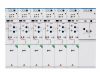
Wenzhou Naisite Electric Co., Ltd supplies GIS Ring Main Units (RMU) designed for for medium-voltage distribution applications across urban infrastructure, industrial facilities, underground substations, and coastal environments.
Our GIS solutions are factory-assembled and fully tested before shipment, ensuring consistent performance and fast on-site deployment.
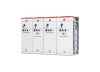
For sites with more space and stable conditions, we also supply KYN28 Air Insulated Switchgear — giving you the flexibility to select the right solution based on your project requirements and budget.
Project Experience
In addition to standard GIS solutions, we have also supported overseas medium-voltage distribution projects with project-specific configurations and technical documentation.
Explore our Turkey GIS project case study to learn more about the application and project requirements.
→ View Turkey GIS Project Case Study
Conclusion
SF₆ Gas Insulated Switchgear combines high insulation capability, reliable arc interruption, and compact design for modern power infrastructure.
From urban substations to renewable energy projects, GIS delivers the reliability and flexibility required by today’s distribution networks. Ongoing advances in environmental technology and digital monitoring are also helping shape the next generation of GIS solutions.
Need support selecting the right GIS solution?
Our engineering team can review your site conditions and recommend a suitable GIS or RMU configuration for your project.
Related Reading
→ Turkey GIS Project Case Study
→ How to Choose the Right RMU for Your Project
→ AIS vs GIS Switchgear: Key Differences Explained

--- END ---

MV & LV Equipment Manufacturer · Wenzhou, China
COMPANY
PRODUCTS
INDUSTRIES