- Phone / WhatsApp:+86 157 0677 9792
- sales@toonice.com
-
English
Why Do Substations Use DC Power Supplies?
May 24,2026
Substation DC power supplies are an integral part of power systems, which are mainly used for relay protection, circuit breaker operation, automation control, and emergency power supply.
Compared with AC power supplies, DC power supplies provide more stable and reliable power output and can continue supplying power when AC systems experience faults or outages.
This article explains why substations use DC power supplies, as well as the functions, structure, voltage levels, and maintenance points of DC systems.
Key Takeaways
- Substations use DC power supplies because they provide stable and reliable power for protection and control systems.
- DC systems can continue operating during AC power outages since battery banks provide backup power support.
- Relay protection devices, circuit breakers, monitoring systems, and emergency equipment all rely on DC power supplies.
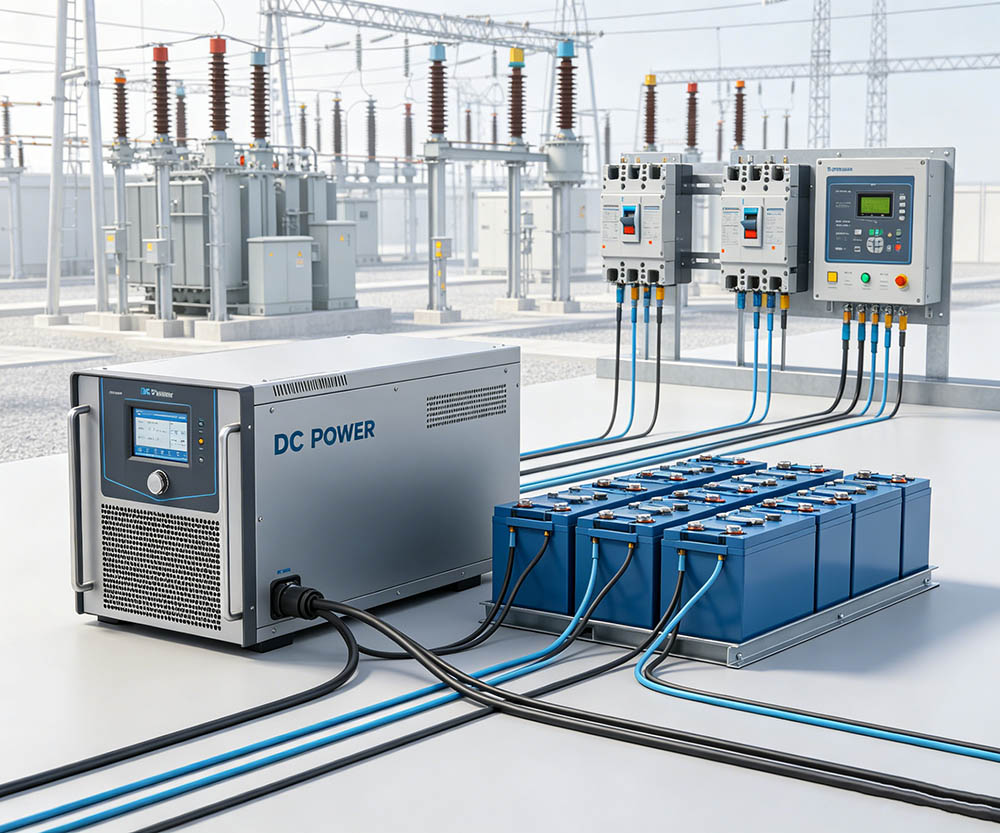
- A substation DC system mainly includes battery banks, charging devices, DC panels, and monitoring equipment.
Why Substations Prefer DC Power Supplies?
Substations prefer DC power supplies because they provide higher stability and reliability. Compared with AC power supplies, DC systems can continue supplying power during fault conditions, which allows substation equipment to operate normally.
High Power Supply Stability
One of the main characteristics of DC power supplies is that their output remains stable and is less affected by grid fluctuations. During substation operation, relay protection systems, monitoring systems, and control circuits require continuous and stable power support.
If the power supply fluctuates significantly, equipment may malfunction or protection systems may fail to operate correctly.
Since DC systems supply power through batteries and rectifier equipment, stable output can still be maintained even when short term fluctuations occur on the AC side, which makes DC power more suitable for substation control systems.
Unaffected by AC Power Outages
When accidents occur in substations, AC systems may lose power, while protection equipment still needs to remain operational. Since DC systems are equipped with battery banks, they can continue supplying power to circuit breakers, relay protection devices, and monitoring systems even when the AC input completely disappears.
Because this independent power supply capability helps fault isolation and system recovery proceed smoothly, DC power supplies are regarded as the final safeguard for substations.
Convenient for Energy Storage and Backup Power Supply
DC systems are usually equipped with large capacity battery banks that can provide energy storage and backup power supply functions. When the AC power supply operates normally, charging devices continuously charge the batteries.
Once AC power is lost, the batteries immediately begin supplying stable power to equipment. Since this switching process occurs almost without interruption, equipment power loss can be effectively avoided, which gives DC power supplies clear advantages in emergency power applications.
Improving the Reliability of Relay Protection
Relay protection devices are used to maintain the safe operation of substations, and their operating speed and reliability directly affect grid safety. If protection devices lose power during faults, accidents may expand further.
DC power supplies provide relay protection systems with an independent and stable power source, which reduces the possibility of malfunction or refusal to operate that may result from AC fluctuations.
Since DC systems also have strong anti interference capability, they are more suitable for protection and control circuits that require high reliability.

Main Functions of DC Power Supplies in Substations
DC power supplies are not only backup power sources for substations, but they also support the stable operation of control systems, protection systems, and automation systems throughout the power network.
Power Supply for Relay Protection
Relay protection devices operate continuously so that they can monitor the operating condition of the power grid in real time. When faults such as short circuits or overloads occur on lines or equipment, protection devices must respond quickly to isolate the faulty section.
DC power supplies provide stable and reliable power support for protection equipment, which ensures that protection actions are not affected even if AC systems become abnormal. Because of this, DC systems support the reliable operation of relay protection systems.
Circuit Breaker Opening and Closing Operations
Circuit breakers are responsible for connecting and disconnecting electrical lines in substations, while their opening and closing actions are usually driven by DC operating power. When system faults occur, circuit breakers must trip within a very short period of time to prevent accidents from spreading further.
If stable DC power is unavailable, circuit breakers may fail to operate normally, which can affect the safety of the entire power grid. Therefore, DC systems are widely used in circuit breaker operating circuits.
Power Supply for Automation and Monitoring Systems
Modern substations widely use automation monitoring systems to monitor equipment conditions, current, voltage, and other operating data in real time.
Since these systems require continuous and stable power support, monitoring interruptions, data loss, or communication failures may occur if the power supply becomes unstable.
DC power supplies provide high stability and strong anti interference capability, which allows automation systems to operate continuously and improves intelligent substation management.
Power Supply for Emergency Lighting and Emergency Equipment
When substations experience AC power outages or accidents, emergency lighting systems and alarm equipment must immediately begin operating so that personnel safety and maintenance work can be ensured.
DC systems continue providing stable power after AC power loss occurs, which allows emergency lighting, communication devices, and emergency equipment to remain operational. This helps improve accident handling efficiency and operational safety.
Components of a Substation DC System
A substation DC system mainly consists of battery banks, charging devices, DC panels, and monitoring and insulation detection equipment. These parts work together to maintain stable DC power system operation.
Battery Bank
Battery banks are energy storage devices within DC systems, which are mainly used for backup power supply after AC power loss occurs. Under normal conditions, batteries remain in floating charge status.
Once AC power disappears, they immediately supply power to protection and control equipment so that the system can continue operating. Because of this function, battery banks are regarded as the backup power source of DC systems.
Charging Device
Charging devices convert AC power into stable DC power while also charging battery banks. These devices must maintain batteries in good operating condition while continuously supplying power to the DC bus.
Modern substations commonly use high frequency switching power supplies because they provide high efficiency and stable performance.
DC Panel
DC panels are centralized control devices within DC systems, which are mainly used for power distribution, protection, and monitoring. They distribute DC power to different circuits and manage the operating condition of the entire system, which makes them an integrated part of substation DC systems.
Monitoring and Insulation Detection Devices
Monitoring and insulation detection devices are used to monitor the operating condition of DC systems in real time, including voltage, current, and insulation status. Once grounding faults or abnormal conditions occur, the system can issue alarms promptly, which helps prevent fault expansion and improves operational safety.
Common DC Voltage Levels
Different types and voltage levels of substations require different DC system voltages. At present, the most widely used DC systems are 110V and 220V systems.
110V DC System
110V DC systems are commonly used in small and medium sized substations and distribution stations.
Since these systems have lower equipment costs, simple structures, and convenient maintenance features, they can meet the power supply requirements of general protection and control equipment. As a result, they are widely used in medium and low voltage power systems.
220V DC System
220V DC systems are mainly used in large substations and high voltage transmission systems. Compared with 110V systems, 220V systems provide stronger power supply capability and longer transmission distances, which allows them to support large circuit breakers and complex protection devices.
Because of these advantages, they are more common in high voltage and ultra high voltage substations.
Application Scenarios for Different Voltage Levels
Different DC voltage levels are suitable for different types of substations. In general, small and medium sized substations more often use 110V systems, while large transmission substations tend to use 220V systems. The final selection depends on equipment capacity, control distance, and system reliability requirements.
Maintenance Points of Substation DC Systems
To maintain the stable operation of DC systems over a long period, substations need regular inspection and maintenance, especially for battery banks, insulation conditions, and charging equipment.
Battery Maintenance
Battery banks are the backup power source of DC systems, and their operating condition directly affects emergency power supply capability. During routine maintenance, battery voltage, capacity, and connection conditions should be checked regularly to prevent aging, swelling, or capacity reduction.
At the same time, environmental temperature should be properly controlled because high temperatures can shorten battery service life, which helps batteries remain in good operating condition.
Insulation Monitoring
If insulation deterioration or grounding faults occur in DC systems, protection systems may malfunction and equipment damage may result. Therefore, substations should continuously monitor the insulation condition of DC systems and handle abnormal grounding points in time.
Since insulation monitoring devices can detect hidden faults in real time, operational safety can be improved and accidents can be prevented from expanding further.
Charging Equipment Inspection
After charging equipment operates for long periods, problems such as module aging, abnormal heat dissipation, or unstable output may appear.
Maintenance personnel should regularly inspect the operating condition of charging modules, output voltage, and cooling fan operation to ensure normal equipment performance. At the same time, AC input and DC output stability should also be tested so that the entire DC system can operate safely and reliably.

Conclusion
Substations use DC power supplies because they provide high stability and reliability while continuing to supply power to equipment during AC outages.
DC systems support relay protection, circuit breaker operation, automation monitoring, and emergency applications, which helps maintain the safe and stable operation of power systems.
Toonice provides substations with reliable performance. If you are interested, please visit the homepage for consultation.
FAQs
Q Why do substations not use AC power as the control power supply?
AC power may fail during faults, while DC power supplies can continue supplying power through battery banks, which provides higher reliability.
Q What is the most significant device in a substation DC system?
The battery bank is the main backup power source during emergency conditions.
Q What is the difference between 110V and 220V DC systems?
220V systems provide stronger power supply capability and are suitable for large substations, while 110V systems are more commonly used in small and medium sized substations.
Q What happens if the DC system loses power?
Relay protection may fail, circuit breakers may stop operating, and monitoring systems may become unavailable.
Q Why should DC systems be maintained regularly?
Regular maintenance helps identify problems such as battery aging and insulation deterioration, which helps maintain safe system operation.

--- END ---

MV & LV Equipment Manufacturer · Wenzhou, China
COMPANY
PRODUCTS
INDUSTRIES