- Phone / WhatsApp:+86 157 0677 9792
- sales@toonice.com
-
English

What Is A Medium Voltage Switchgear?
Feb 12,2026
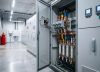
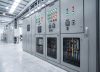
Medium voltage switchgear (MV switchgear) is a core hub in power systems connecting transmission networks and terminal loads, undertaking critical functions of control, protection, isolation, and monitoring. Its typical application voltage range is 1 kV to 52 kV (as defined by the IEC 62271-200 standard), and it is widely deployed in substations, industrial plants, data centers, new energy power plants, and urban power distribution networks.
What Are Medium-voltage Switchgear?
According to IEC 62271-200 and GB/T 3906 standards, medium-voltage switchgear is defined as:
“A combination of one or more switching devices (such as circuit breakers, load switches, disconnectors) and related control, measurement, protection and regulation equipment, all internal components of which are enclosed in a grounded metal enclosure, for the distribution and protection of electrical power in a medium-voltage AC system.”
Its core functions include:
- Normal operation: Connects/disconnects load current
- Fault protection: Quickly disconnects faulty sections in case of short circuit or overload
- Electrical isolation: Provides visible disconnection for safe maintenance
- Status monitoring: Integrates current/voltage transformers and intelligent terminals (IEDs), supporting SCADA/EMS systems
Core Architecture and Safety Classification of Medium Voltage Switchgear
Classification by insulation and structure(IEC 62271-200)
| Type | Full Name | Key Characteristics | Typical Applications |
| AIS | Air-Insulated Switchgear | Air insulation; open structure; low cost | Outdoor substations; industrial sites with ample space |
| GIS | Gas-Insulated Switchgear | SF₆ gas insulation; highly compact design | Urban central substations, underground substations, islands, and other space-constrained locations |
| Solid Insulated | Solid-Insulated Switchgear | Epoxy resin encapsulation; SF₆-free design | Environmentally sensitive areas; small to medium distribution systems |

Classification by degree of metal enclosure
| Type | Full Name | Key Characteristics | EPC Considerations |
| Metal-Enclosed (ME) | Metal-Enclosed Switchgear | All live parts are enclosed within a grounded metal housing, but internal compartments are either absent or not fully segregated | Lower cost; suitable for general industrial applications |
| Metal-Clad (MC) | Metal-Clad Switchgear | Each functional unit is housed in an independent metal compartment (circuit breaker, busbar, cable, and low-voltage compartments), with full “five-interlock” safety features | Preferred for high-reliability applications such as hospitals, data centers, and petrochemical facilities |

Key technical parameters
Core performance parameters
| Parameter | Typical Values (12 kV Class) | Applicable Standard | Engineering Significance |
| Rated Voltage | 12 kV / 24 kV / 40.5 kV | IEC 62271-200 | Must be ≥ the system’s maximum operating voltage (Um) |
| Rated Current | 630 A – 4000 A | — | Determines conductor sizing and allowable temperature rise |
| Rated Short-Circuit Breaking Current | 20 kA – 40 kA / 3 s | — | Must be verified against the system’s maximum short-circuit level |
| Internal Arc Classification (IAC) | AFL / AFLR | IEC 62271-200 Annex AA | Ensures personnel safety (test pressure ≥ 1.5 bar) |

Application scenarios
| Industry | Application Scenario | Recommended Configuration | |
| Energy | Wind and solar step-up substations | Outdoor compact AIS or GIS; IP54 enclosure; C5-M anti-corrosion protection | |
| Industrial | Steel, chemical, and mining facilities | Metal-clad (MC) switchgear; LSC-2B; IAC AFLR; full five-interlock safety system | |
| Infrastructure | Metro systems, airports, hospitals | MC switchgear with automatic transfer switch (ATS); high-availability design | |
| Commercial Buildings | Supertall buildings; data centers | Dry-type transformers paired with MC switchgear; low-noise operation (≤ 65 dB) |
Conclusion
Medium-voltage switchgear acts as the “immune system” of the power system, operating silently under normal conditions and responding decisively to faults. For engineers and EPC teams, selecting the appropriate type (AIS/GIS/MC) and strictly controlling manufacturing standards (IEC 62271-200) are prerequisites for building inherently safe, highly available, and easy-to-maintain distribution networks.
Driven by the new power system and the “dual carbon” goal, medium-voltage switchgear is rapidly evolving towards intelligence, greenness, and compactness, becoming a key carrier for the digital transformation of energy infrastructure.
Appendix: Commonly Used Standards
- IEC 62271-200: AC metal-enclosed switchgear for rated voltages above 1 kV and up to 52 kV
- GB/T 3906:6 kV~40.5 kV AC metal-enclosed switchgear and control equipment
- DL/T 404: Technical specifications for ordering indoor AC high voltage switchgear
FAQ
- What are the essential differences between Metal-Enclosed and Metal-Clad switchgear?
Metal-Clad is a higher form of Metal-Enclosed.
The MC type requires each functional unit (circuit breaker, busbar, cable) to be equipped with:
- Aremovable circuit breaker trolley
- Meeting LSC-2B service continuity requirements (single-bay maintenance does not affect other circuits)
- Possessing complete mechanical five-proof interlocking
- What is the IAC internal arc rating? Why is it important?
IAC (Internal Arc Classification) is an internal arc test certification specified in IEC 62271-200, verifying whether equipment can:
- Limit the outward ejection of arc energy
- Ensure the safety of operators in designated positions (e.g., front, side)
The grade is represented by AFLR:
- A: Arc duration 0.5 s
- F: Test location includes front
- L: Includes side
- R: Includes rear
- Is GIS necessarily superior to AIS?
This is not the case; a comprehensive assessment is required.
| Dimension | AIS | GIS |
| Initial Cost | Low | High (approximately 2–3× that of AIS) |
| Footprint | Large | Extremely compact (about 10–20% of AIS) |
| Maintenance | Straightforward; easy on-site servicing | Requires specialized tools; SF₆ handling is complex |
| Environmental Impact | No greenhouse gases | SF₆ has a GWP of 23,500 and requires recovery and recycling |
Recommendation: GIS is recommended for areas with limited space or environmental sensitivity; AIS is more economical for conventional industrial plant areas.
- Can MV switchgear be directly connected to the generator outlet?
Yes, but it requires special design:
- The generator’s short-circuit current decays slowly (X”d is small), requiring verification of the circuit breaker’s DC component withstand capability
- Large voltage fluctuations necessitate enhanced insulation coordination
- It is recommended to use a generator-specific circuit breaker (such as ABB VD4G), which offers higher breaking capacity
- How to verify the effectiveness of the “five-protection” functions of switchgear?
“five-protection”refer to:
- Prevent accidental opening/closing of circuit breakers
- Prevent operating disconnect switches under load
- Prevent connecting grounding wires while the circuit is energized
- Prevent closing switches with grounding wires connected
- Prevent accidental entry into energized compartments
Verification method:
- Simulate each operation item in the FAT (Factory Acceptance Test)
- Check whether the mechanical/electrical interlocks forcefully prevent unauthorized operations
- Require the supplier to provide a five-proof logic diagram and sign for confirmation

--- END ---

MV & LV Equipment Manufacturer · Wenzhou, China
COMPANY
PRODUCTS
INDUSTRIES