- Telephone: +86-139-8977-9778
- Email: jack@toonice.com
- English

FLN36-20
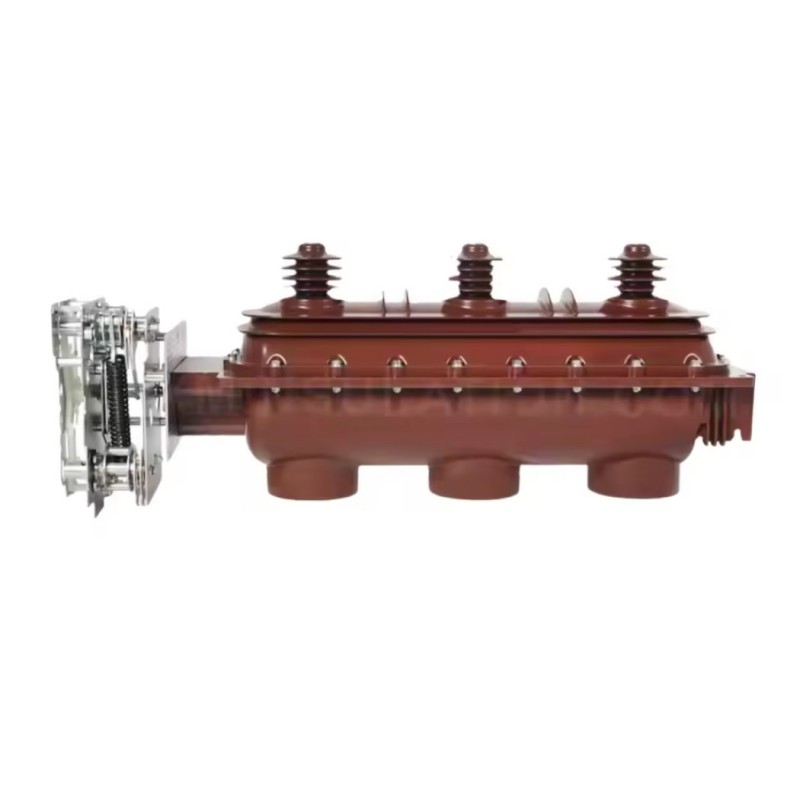
FLN36-20 SF6 Load Break Switch
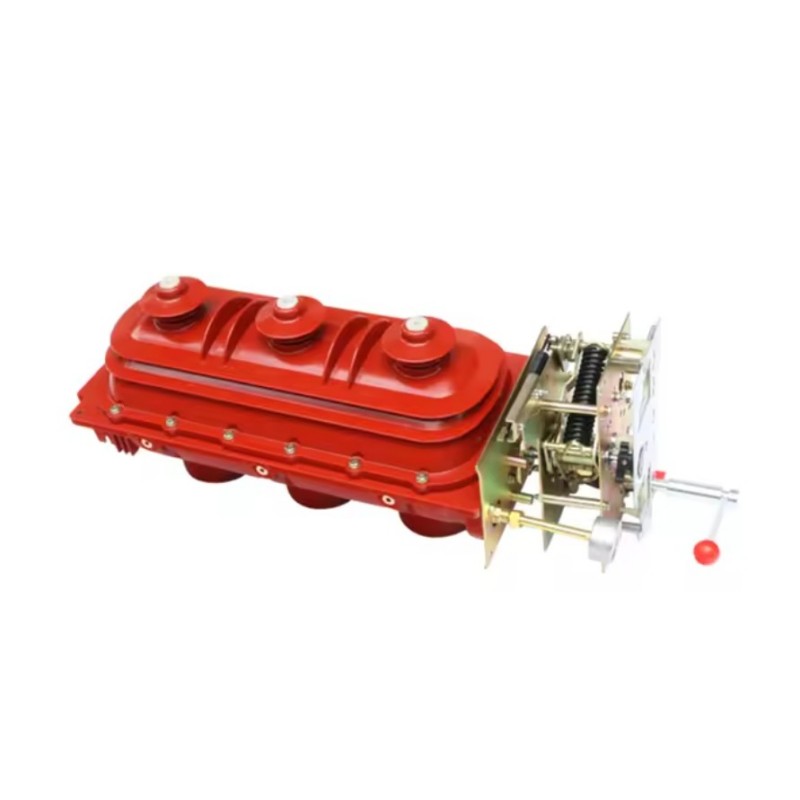
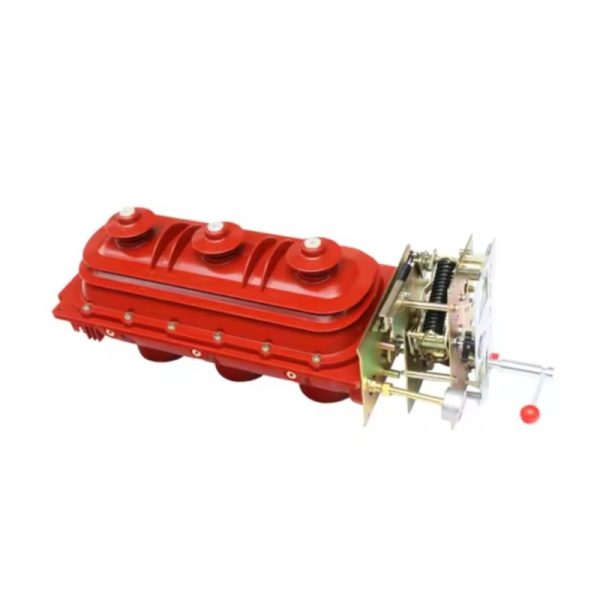
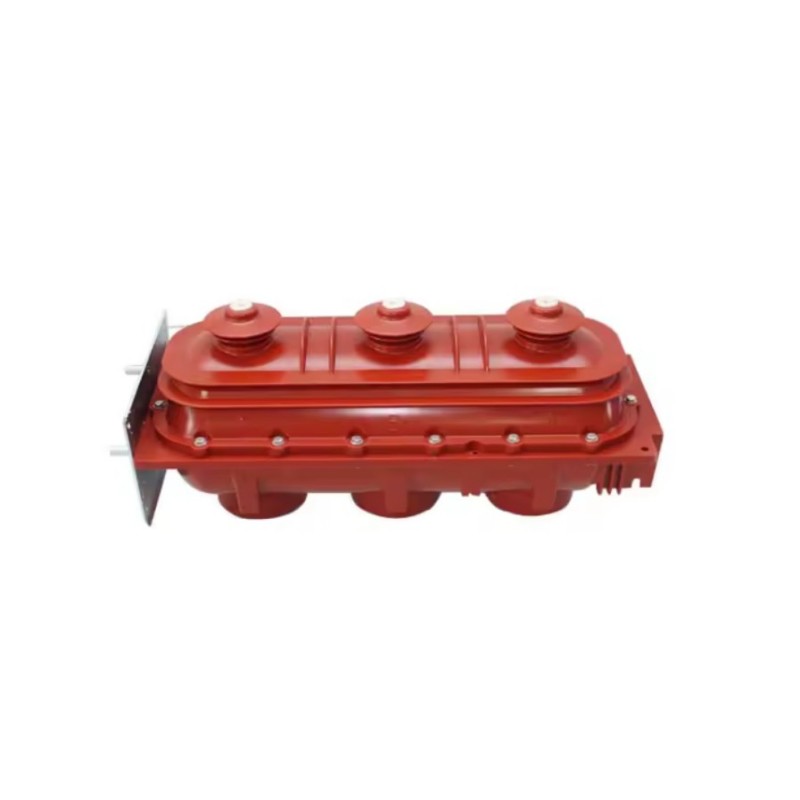
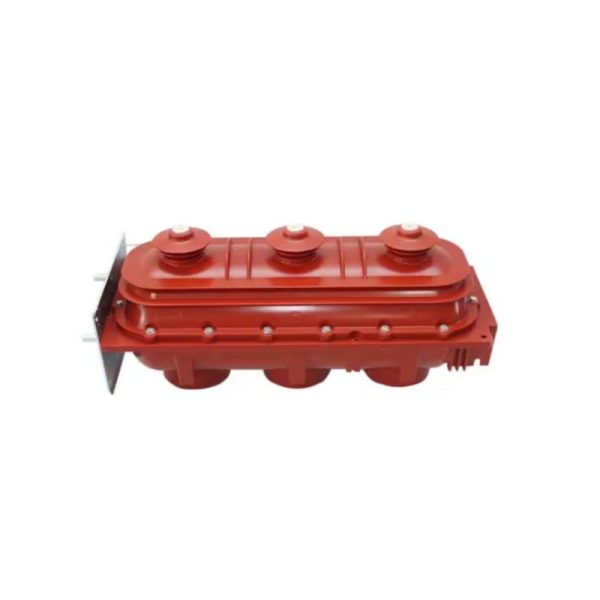
FLN36-20KV SF6 load switch is an indoor/outdoor universal AC high-voltage switchgear specially developed for high-voltage distribution network backbone lines, large energy bases, and high-end industrial core distribution. It uses high-purity SF6 gas as the insulation and arc extinguishing medium, strictly follows GB3804-2004, GB16926-2009, IEC 62271-105, and IEC 61850 standards for research and development and manufacturing, with a rated voltage of 20KV, a rated frequency of 50Hz, a rated current of 1250A/1600A/2000A optional, and a mechanical life of ≥ 2000 cycles.
The product adopts a high-strength epoxy resin integral casting sealing structure, matched with a military grade anti-corrosion alloy shell, and equipped with a G-type four spring energy storage operating mechanism, which can achieve precise linkage of “closing opening grounding locking energy storage” five positions, supporting intelligent remote control, data acquisition, linkage regulation, automatic operation and maintenance, and digital traceability. The incoming and outgoing lines support multiple ways of adaptation for cables, busbars, overhead lines, and are suitable for installation forms such as ring main units, prefabricated substations, outdoor switch stations, and high-voltage distribution network hub stations.
The core is used for 20KV high-voltage distribution network backbone lines, large energy bases, high-end heavy-duty industrial core distribution, and can rely on breaking normal load current, cable charging current, no-load transformer current, and short-circuit transfer current. It is a large-scale high-voltage distribution network. The core high-end equipment for power and intelligent upgrading.


Features
1. High voltage level adaptation, outstanding load-bearing capacity of the main line:
specially developed for 20KV high-voltage distribution network, the insulation structure and arc extinguishing system are comprehensively strengthened according to the 20KV voltage standard, and the insulation gap is 12% larger than that of 17.5KV products, which can effectively resist the risk of high-voltage insulation breakdown. It is suitable for the high-power distribution needs of core nodes of high-voltage distribution network main lines and large energy bases, without the need to add voltage reduction equipment, and can be directly connected to the 35KV distribution network system, reducing the construction cost of distribution network.
2. Ultra high power carrying capacity, suitable for extreme loads:
The rated current supports three options of 1250A/1600A/2000A, and the rated short-time withstand current is increased to 55kA/3s, which is more than 10% higher than the carrying capacity of 17.5KV products. It can carry extreme high load power supply for large energy bases and high-end heavy industries. The 2000A ultra high power version can meet the demand for ultra high current distribution and is suitable for high load transmission scenarios of high-voltage distribution network backbone lines, avoiding equipment failures caused by load overload.
3. High end configuration of insulation arc extinguishing, with full safety performance:
Ultra high purity SF6 gas (purity ≥ 99.9995%) is used as the insulation and arc extinguishing medium, and the rated pressure is increased to 0.085MPa at 20 ℃. The arc extinguishing chamber adopts a new type of ultra efficient arc extinguishing structure+three arc adsorption device, and the arc extinguishing efficiency is 12% higher than that of 17.5KV products. The opening and extinguishing time is ≤ 10ms, which can quickly and reliably cut off various complex load currents and short-circuit transfer currents at 20KV level. The SF6 gas leakage rate is ≤ 5 × 10 ⁻ Pa · m ³/s, and the insulation performance is stable during long-term operation, eliminating various high-voltage safety hazards.
4. Intelligent operation mechanism, doubling operation and maintenance efficiency:
equipped with G-type four spring energy storage operation mechanism, adopting military grade transmission structure and intelligent locking system, the mechanical life is extended to 2000 cycles, which is 11% higher than 17.5KV products. It supports six operation modes: manual, electric, remote control, intelligent linkage, automatic operation and maintenance, and digital traceability. The electric operation adopts industrial grade PLC intelligent control module, which can achieve operation automation, precise fault positioning, and visualized operation and maintenance data, adapting to the intelligent unmanned and refined operation and maintenance needs of high-voltage distribution network.
5. Extreme environmental adaptability and top-notch protection performance:
The shell adopts high-strength epoxy resin integral casting+military grade anti-corrosion alloy shell, with a protection level of up to IP68+, which can effectively resist extreme environments such as long-term deep water immersion (within 1.5m), strong corrosion, strong vibration, extreme high and low temperatures, and strong ultraviolet rays; The applicable temperature range is extended to -50 ℃~+65 ℃, and the altitude can be extended to 5000m. It can adapt to various extreme scenarios such as extreme cold, extreme heat, high altitude, and strong corrosion. Outdoor outdoor installation does not require additional protection and is suitable for multiple extreme scenarios of high-voltage distribution network main lines.
The product has a rated peak withstand current of 125kA, rated lightning impulse withstand voltage of 190kV between phases and to ground, 210kV between faults, rated short-time power frequency withstand voltage of 120kV between phases and to ground, 130kV between faults; rated active load breaking current of 1250A/1600A/2000A is optional, rated cable charging current of 180A, can break no-load transformer capacity of 6300kVA, rated short-circuit transfer current of 45kA;
SF6 gas rated pressure (gauge pressure at 20 ℃) of 0.085MPa, equipped with gas density relay, sound and light alarm device, leakage online detection sensor, three arc adsorption device, intelligent operation and maintenance module, and digital traceability module. When the pressure is below 0.075MPa, it automatically alarms, uploads data, and triggers linkage protection;
The applicable environmental humidity is that the average daily relative humidity does not exceed 95%, and the average monthly relative humidity does not exceed 90%. It can withstand strong corrosive gases, strong vibrations, extreme high and low temperature impacts, direct ultraviolet radiation, and long-term deep water immersion; The implementation standards include GB3804-2004, GB16926-2009, IEC 60265-1, IEC 62271-105, IEC 61850, and are compatible with international high-voltage distribution standards, which can meet the needs of high-end high-voltage distribution networks and cross-border high-end projects.
The product can be customized with ultra high power versions (2000A), extreme environment adaptation versions (extreme cold, extreme heat, high altitude), intelligent upgrade versions, and cross-border high-end project versions. It can be equipped with fuses, lightning arresters, current transformers, voltage transformers, intelligent measurement and control devices, power quality monitoring modules, digital traceability systems and other accessories to form a complete high-end intelligent high-voltage protection system.
If you need detailed technical parameter tables, installation drawings, high-voltage distribution network adaptation solutions, solutions for ultra high load scenarios or sample applications, you can contact the manufacturer’s technical team for specialized support. In addition, the product supports digital upgrading of distribution networks and can seamlessly link with the distribution network IoT platform to achieve real-time monitoring, data statistics, fault warning, and intelligent regulation of equipment operation status, helping high-voltage distribution networks achieve digital and intelligent transformation.
Let’s Get Started
Providing you with the most trusted energy solutions in an unpredictable world.
Contact UsRequest an Insurance Quote
Specification
| Item | Unit | Data | |
| Rated voltage | kV | 20 | |
| Main circuit lightning impulse withstand voltage (Same,relative/between fracture surfaces) (peak value) | kV | 125 | 145 |
| Main circuit 1-minute power frequency withstand voltage (Same,relative/between fracture surfaces) (peak value) | kV | 50 | 60 |
| 1-minute power frequency withstand voltage of auxiliary circuit | kV | ||
| Rated current | A | 630 | |
| Transfer current | A | 870 | |
| Rated short-circuit closing current (peak) | kA | 50 | |
| Rated short-time withstand current | kA | 20 | |
| Rated short-circuit duration | S | 3 | |
| Rated peak withstand current (peak) | kA | 50 | |
| Grounding switch closing current (peak) | kA | 20 | |
| Peak withstand current of grounding switch (peak) | kA | 50 | |
| Mechanical lifespan of load switch | times | 3000 | |
| Mechanical lifespan of grounding switch | times | 2000 | |
| Rated pressure of arc extinguishing chamber (20 °C) | bar | 1.45 | |
Download

Related Products


FAQs
What are the key differences and applicable scenarios between FLN36-20KV and FLN36-17.5KV products?
The core differentiation focuses on three points: first, voltage level. 20KV is suitable for high-voltage distribution network backbone lines and can be directly connected to 35KV systems, while 17.5KV is mainly suitable for special medium and high voltage distribution networks and cross-border scenarios; The second is power carrying, with 20KV supporting 2000A ultra-high current and a short-term withstand current of 55kA, which has stronger carrying capacity and is suitable for extreme high loads; The third is protection and environment. The 20KV protection level is IP68+, which can be immersed in deep water for a long time. The environmental adaptability range is extended to extreme cold and heat, 5000m high altitude, and the protection performance is top-notch. Applicable scenarios focus on: 20KV focuses on domestic high-voltage distribution network backbone lines, large energy bases, and high-end distribution in extreme environments, while 17.5KV focuses on cross-border projects and special medium to high voltage distribution networks.
This product can be directly connected to a 35KV distribution network system. What should be noted when connecting?
When connecting to a 35KV distribution network system, three points should be noted: firstly, parameter matching. Confirm the voltage, frequency, and short-circuit current parameters of the 35KV distribution network system to ensure they match the product parameters, especially the rated short-time withstand current and rated lightning impulse withstand voltage, which must meet the system requirements; Secondly, supporting equipment such as fuses and lightning arresters should be compatible with a voltage level of 20KV, and the rated parameters should match the system load and short-circuit current. It is recommended to use high-end intelligent supporting equipment to achieve intelligent linkage with the product; The third is communication debugging, debugging the product communication protocol to ensure seamless linkage with the 35KV distribution network intelligent system and IoT platform, realizing functions such as data acquisition, remote control, and fault warning. At the same time, insulation testing should be carried out to ensure that the insulation performance meets the standard after connection and there is no risk of insulation breakdown.
The product supports three levels of rated current selection. How to choose the core nodes of the high-voltage distribution network backbone?
The selection of core nodes for high-voltage distribution network backbone depends on the node load capacity and transmission requirements. Firstly, for branch nodes of the backbone with a load capacity of less than 1250A, choosing the 1250A version can meet the load distribution needs of branch nodes and provide higher cost-effectiveness; The second is the middle node of the main line, with a load capacity of 1250A~1600A (such as the main line node of a large industrial park). The 1600A version is selected, which can bear moderate extreme loads and adapt to the needs of most main line nodes; The third is the core hub nodes of the main line, with a load capacity of 1600A~2000A (such as large-scale energy base main line hubs and urban high-voltage distribution network core hubs). Choosing the 2000A version can carry super large loads, ensuring stable power supply to the core nodes of the main line and avoiding large-scale power outages caused by load overload. At the same time, a digital traceability module is required to achieve visualization of operation and maintenance data.
The product has a protection level of IP68+and can be immersed in deep water for a long time. What additional protection is required for outdoor installation in flood prone areas?
Outdoor installation in flood prone areas requires three additional protections: first, installation protection. Choose a location with high terrain and smooth drainage, build a high-strength rainproof and flood control shed, raise the equipment installation height (more than 0.5m above the local historical highest flood water level), and install a flood control base at the bottom of the equipment to prevent flood backflow; The second is to strengthen the sealing, inspect all sealed interfaces of the equipment, install sealing reinforcements, check the seals every 3 months, replace aging seals, calibrate leak detection sensors, ensure stable sealing performance, and prevent floods from entering the interior of the equipment; The third is emergency protection, equipped with emergency drainage equipment. After floods, the equipment should be cleaned and dried in a timely manner, the operating status of the equipment should be checked, and various parameters should be calibrated to ensure that the equipment is not faulty before being put back into use.
The product supports digital traceability function. What specific operation and maintenance data can be traced? How to use this data to optimize operations and maintenance?
The digital traceability function can trace five core operation and maintenance data: firstly, operation logs, including opening and closing operation time, operation mode, operator, etc; The second is equipment operation data, including SF6 gas pressure, purity, equipment temperature, line current and voltage, etc; The third is fault data, including fault type, fault time, fault location, handling method, etc; The fourth is operation and maintenance data, including the time, content, and operators of lubrication, calibration, seal replacement, and other operation and maintenance operations; The fifth is energy consumption data, including equipment operation energy consumption, line transmission losses, etc. By utilizing this data, two points of operation and maintenance optimization can be achieved: firstly, precise operation and maintenance. Based on fault data and operational data, potential equipment failures can be predicted, and operation and maintenance can be carried out in advance to reduce the occurrence rate of failures; The second is efficient operation and maintenance, optimizing operation and maintenance cycles and plans based on operation and maintenance data and energy consumption data, reducing unnecessary operation and maintenance costs, and optimizing line transmission plans based on energy consumption data to reduce energy loss.
Related Applications

Core distribution of large energy bases: used for the core distribution system of large energy bases such as thermal power stations, hydropower stations, centralized photovoltaic power stations, and large wind farms. It is installed in the ring main unit and prefabricated substation of the energy base distribution station, responsible for the core distribution control and protection of the power generation equipment and boosting equipment of the energy base. The 20KV voltage level can be directly connected to the 35KV distribution network system. The 2000A ultra high power version can bear the extreme high load power supply demand of the energy base. The top-level insulation arc extinguishing performance can ensure the stable operation of the equipment under high load conditions. The environmental adaptability can cope with the complex outdoor environment of the energy base (such as high humidity of hydropower stations and strong winds of wind farms), ensuring stable power generation and transmission of the energy base.

High end heavy industry core power distribution: Suitable for the core power distribution system of large high-end heavy industrial plants (such as large metallurgical plants, heavy machinery plants, large petrochemical plants, and high-end equipment manufacturing bases). These scenarios have large electrical loads, frequent load fluctuations, and complex working conditions such as strong corrosion, strong vibration, and high temperature. The 20KV voltage level can meet the high-voltage power distribution needs of high-end heavy industry. The 2000A ultra high power version can carry extreme high loads of large production equipment (such as steelmaking furnaces and large reactors). The military grade anti-corrosion shell can resist the strong corrosion and vibration effects of industrial scenes. The intelligent automatic operation and maintenance function can avoid production interruptions caused by faults and ensure continuous and stable production of high-end heavy industry.

Extreme Environment High Voltage Distribution Network: Used for high voltage distribution systems in extremely cold areas (such as northern extremely cold borders and high latitude mining areas), extremely hot areas (such as tropical deserts), and extremely high altitude areas (such as high-altitude core areas). The extreme environment adaptation version of the product can adapt to extreme temperature differences of -50 ℃~+65 ℃ and high-altitude low-pressure environments below 5000m. The IP68+protection level can resist the erosion of extreme environments, and the 20KV voltage level can meet the high voltage distribution needs in extreme environments. The intelligent remote operation and maintenance function can reduce the difficulty of on-site operation and maintenance in extreme environments, ensure the stable operation of high voltage distribution networks in extreme environment areas, and solve the problem of adapting distribution network equipment in extreme environments.


